
In today’s fast-paced construction industry, the role of a mechanical estimator has evolved far beyond simply counting parts on a page. Producing a winning, profitable bid for a construction project requires a complex blend of advanced technical skills, digital proficiency, and highly developed soft skills.
Whether you are an entry-level trainee looking to get hired faster, or a senior estimator wanting to refine your craft, this comprehensive guide to mechanical estimating outlines the exact skill set required to thrive.
1. Deep Technical Expertise and MEP Knowledge
To effectively calculate the costs of a project, an estimator must possess a profound understanding of construction and a deep mastery of understanding construction methods. A successful estimator often has the background of a mechanical engineer or specialized tradesperson, possessing vast technical expertise across multiple engineering disciplines, particularly MEP (Mechanical, Electrical, and Plumbing).
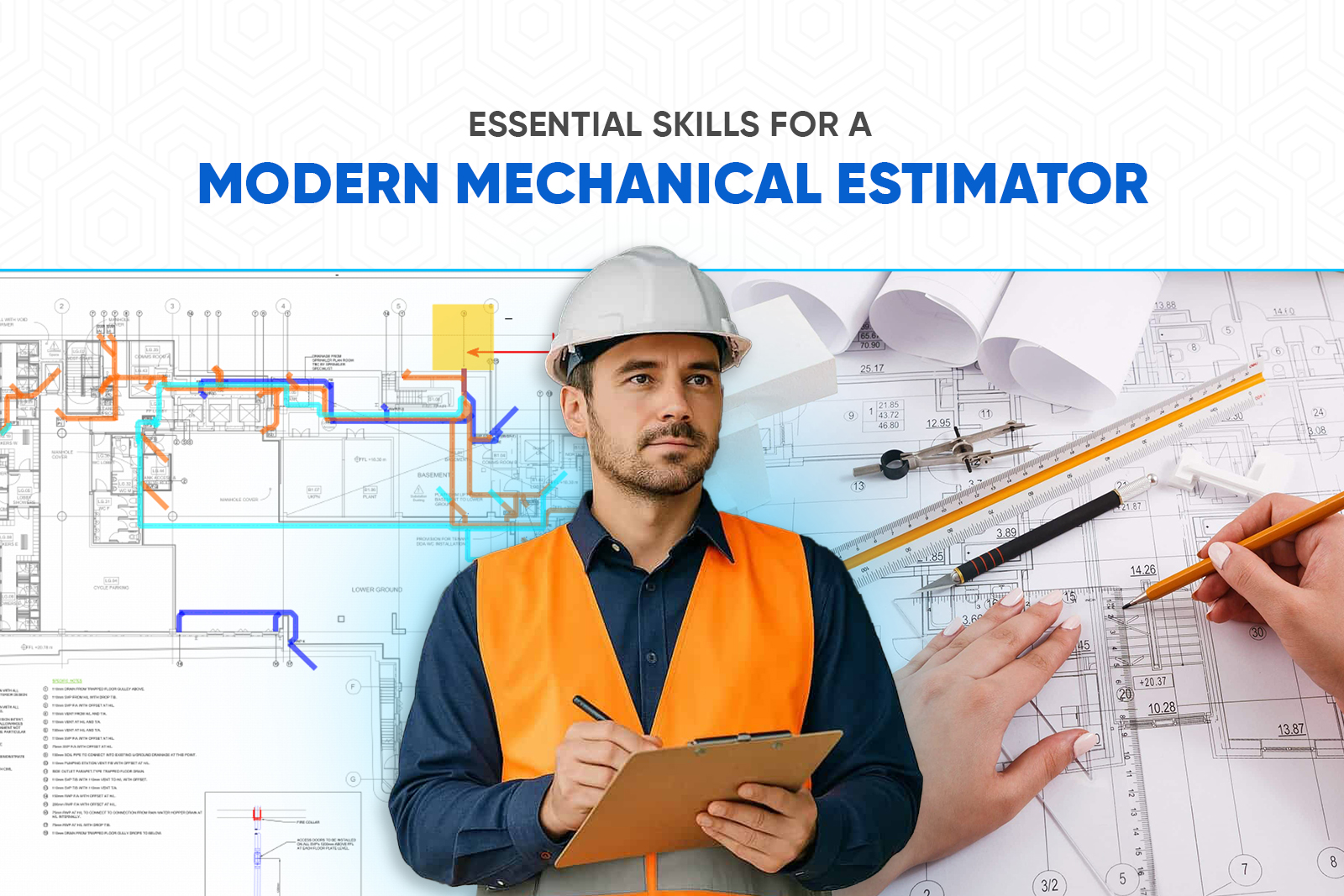
A core skill is the ability to read and interpret complex construction drawings, technical drawings, and every detailed blueprint. You must understand how various mechanical systems, HVAC units, and individual mechanical components interact within a building. Furthermore, understanding the realities of off-site fabrication and adhering to strict industry standards are critical construction skills that ensure the key mechanical systems function correctly. In highly specialized sectors, an estimator might even need a basic understanding of advanced structural concepts like finite element analysis to support complex mechanical designs.
2. Mastery of the Takeoff and Cost Analysis
The foundation of the estimating process is the takeoff. A proficient construction estimator must accurately extract the precise quantities of materials and quantities from construction drawings.
Achieving maximum accuracy and efficiency during this estimation phase is what separates average cost estimators from great ones. You must generate accurate cost estimates by analyzing material costs, labor rates, and overall construction costs. This requires generating a detailed cost report complete with granular cost breakdowns and rigorous cost analysis. Ultimately, precise cost estimation guarantees that the final estimate protects the construction firms from bidding too low and losing money.
3. Proficiency in Estimating Software and Technology
Gone are the days of manual spreadsheets and highlighters. To keep up with modern construction management, you must master industry-leading estimating software and digital software tools.
Expertise in programs like Bluebeam, AutoCAD, and dedicated mechanical and electrical takeoff platforms is mandatory. New estimators who embrace these technologies develop their estimating skills and skills faster. Furthermore, utilizing analytics to track historical data allows estimators to accurately forecast expenses and adapt to fluctuating market conditions.
4. Value Engineering and Risk Management
Beyond just pricing what is on the drawing, an elite estimator adds immense value through value engineering. By understanding the entire project lifecycle, estimators can identify cost-saving opportunities and propose alternative materials that support sustainable construction without sacrificing quality.
A vital part of project management is forecasting the costs associated with delays or material shortages. By proactively identifying potential financial risks early in the tender stage, the estimator protects the company’s bottom line, making this one of the most vital skills every professional must hone throughout your career.
5. Excellent Communication and Collaboration
While the math must be perfect, the required skills for modern estimator roles go far beyond numbers. Excellent communication skills (and general communication skills) are absolutely critical.
To navigate complex projects, an estimator must work closely with project managers, coordinate with internal project teams, and liaise with suppliers to secure the best material pricing. You will frequently need to liaise with a subcontractor or multiple subcontractors to verify their scopes of work. The ability to work collaboratively ensures that every single stakeholder is aligned. Strong problem-solving abilities and the capacity to clearly explain cost estimates are what make an estimator an invaluable asset to the team.
Ready to Outsource Your Estimating?
If you want to become an estimator or you want to specialise in mechanical takeoffs, developing this robust mix of technical and soft skills is essential. However, finding and retaining an in-house estimator with this exact level of expertise is costly and time-consuming.